
40 things that made me who I am (for my 40th birthday)
Lessons from the mistakes and choices I've made that led me to being the happiest, healthiest, and most successful I've ever been.
Lessons from the mistakes and choices I've made that led me to being the happiest, healthiest, and most successful I've ever been.
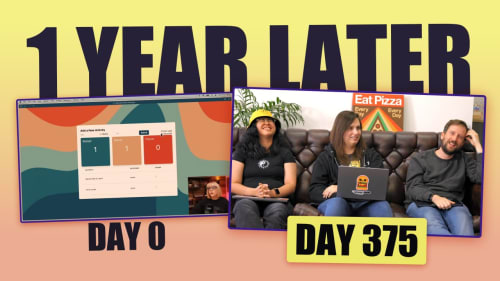
I never feel like I'm doing enough. But I looked at what I was doing a year ago and... it was kind of a shock how much changed. There's a lesson in here.

“Trying to go viral” is not a strategy. I learned that the hard way.

I very much believe that none of this stuff matters. Our jobs, the work, all of it. It’s completely meaningless. I also believe this is a wonderful thing.

How do you accomplish big things (and not end up too burned out to enjoy your success)? You need to apply constant, gentle pressure.

The keys to rapid growth are deliberate practice and continuous feedback. Small improvements add up fast.
I used to believe ability was everything. I thought talent was the key to success. But I was wrong. Ability doesn't matter if you don't do the work.

Learn how the best developer experience engineers multi-leverage ideas to turn one piece of content into 10+. This is THE secret to effective devrel.

The greatest trick we ever pulled on ourselves as knowledge workers was convincing ourselves we could juggle multiple projects with no consequences.

Every once in a while you get lucky enough to work on a project that taps into everything you love. I led one recently — and it goes live TODAY.

When you define work, do you focus on the output or the outcome? Learn what the difference is — and why it matters.

Taking real, fully disconnected time off is good for your health and for your team. But you have to ACTUALLY disconnect to get the benefits.

No matter what you’re building — habit, tool, or company culture — choosing the right defaults is critical. Learn how to use inertia to your advantage.

There are two ways to create. Either we intentionally make progress toward goals, or we drift & see what happens. For best results, I think we need both.

“If you can’t say something nice, don’t say anything at all” is terrible advice that often backfires. Let’s find another way of looking at caring for people.

If we want a happy, fulfilling career, what should we focus on? Learn an exercise that’s helped me create clarity on where to focus my effort for success.

They say “no good deed goes unpunished”. When we finish projects, it often leads to additional work. Whether or not that’s a good thing is up to us.
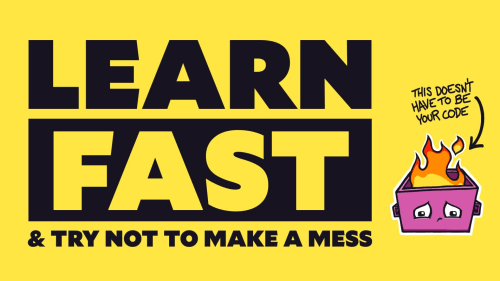
People asked how to overcome objections from team members, management, & leadership when trying to adopt change. These ideas might help.

We need to ship fast, learn fast — and do it all without burying ourselves in technical debt. Here's one way to set up your team for success.

Tackling projects with a team requires process, but too much process stifles innovation.

The pressure to “get it right” when making content can be brutal. If we reframe content creation to be a process, it doesn’t have to be so rough.

If your goal is to be more consistent with content, your instinct may be to make a plan. But trying to plan your way to a creative habit is a mistake.
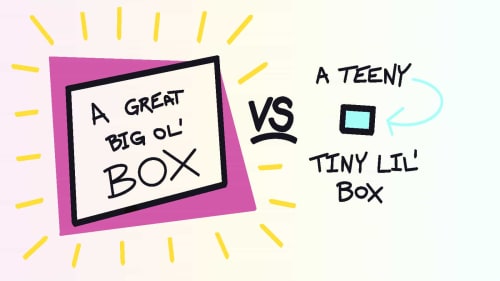
If you’ve got big ideas and can’t seem to get people to buy in, it might not be your idea. You might just need to draw the box smaller.

Getting things done right is critical, but how you get things done matters. Learn why toolkits are a better approach than checklists when creating processes.

Are we successful because we grind? Or in spite of it? Learn how the grind might be holding you back instead of giving you the boost we might expect.

How can we combine our knowledge of human behavior with critical thinking to give our customers, our teams, and ourselves the best chance for success?

Every year I write a personal retrospective to take a look at where I've been and set goals for where I want to go next — posted in public for the curious.

How do we know we’ve planned enough? It’s impossible to plan perfectly, but a solid plan is still critical for getting things done.

The best chefs rely on mise en place to guarantee every meal comes out right. It’s also a killer productivity hack. Here’s how you can start using it today.

The “right” or “wrong” decision depends on who you are. How can you be more sure you’re making the right decision for you? Know what you’re optimizing for!

If we hope to turn our Big Ideas™ into meaningful progress, we need to become ruthless, murderous editors.

I set goals at the beginning of 2019. This is a check in to see how I’m doing, what I should keep up, and what I should change to make sure I get where I want to go.

Every negative emotion I’ve felt (or caused) can be traced back to violated expectations. Learning to set better expectations is a superpower.

Yak shaving, meta-work, and why they might just be the most important part of making meaningful progress.

How can we design systems that are friendly to beginners, but accessible to experts? There’s no one-size-fits-all solution — we need layers of abstraction.

Goals only matter if they’re measured. I’m learning from last year and setting measurable goals to make 2019 my best year yet.

If we want to solve problems effectively, we need to know which part of the problem to focus on at what time — and when to shift focus elsewhere.

What do dirt floors have to do with going to school? And what does any of that have to do with working more effectively?

Underneath the things we do, there are almost always deeper reasons. In order to make the best decisions and live the best life, we should figure out what they are.

For many of us, 2017 was a pretty rough year. In this post, I’ll take a look at my 2017 experience, and how I’ll use that information to improve my 2018.
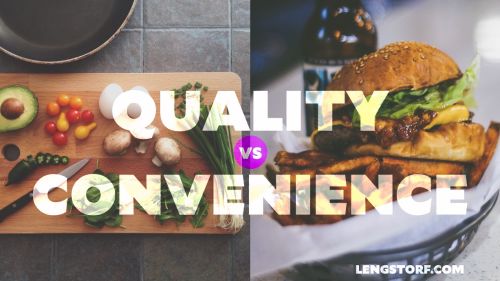
Why is it — even though we KNOW what’s right — we often end up taking shortcuts and doing the wrong thing? Here’s how to be your best self, every time.

In 2014, I claimed travel is not only possible, but cheaper, healthier, & more productive than living at home. 2 years & 13 countries later — was I right?
We all look at the past sometimes and think about what went wrong. Here’s a simple exercise to make sure reflecting on our past is building a better future.

Success is not how much money you make. It’s not how much stuff you own. It’s not your job, your status, or your rank against the neighbors. So what is it?

If you worry that trying new ideas might be “wasted time”, consider this: I lived in a van and wore eyeliner for two years — and I owe my career to it.

If you’re waiting for inspiration, you’re doing it wrong. Great ideas don’t happen overnight — you have to make sure you give them a chance to grow.
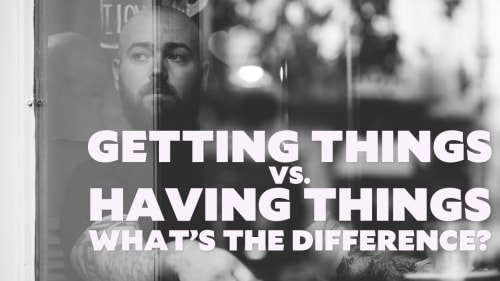
It’s tempting to always push for more. But does it actually make us happy when we get it? Why aren’t we happier after we achieve our goals?

We’re not born as “glass half full” or “glass half empty” people. We make that choice each day. Here’s how to stop negativity and start being more positive.

The quest for happiness is a rollercoaster of highs and lows. But can we build long-term happiness? I think it’s possible. Let me explain. With cupcakes.
In your first year as an entrepreneur, it feels like you need to be running at 110%, all the time. But is that sustainable? Or necessary? Or even helpful?
If you don’t get enough done? You feel like shit. Work too much? You feel like shit. How can you stay happy and avoid burnout? Find the Goldilocks Zone.
How can we make sure the things we care about most still get done, even when things get busy? Willpower isn’t enough; we need a routine to keep us on track.

In which our hero grapples with his inner tourist and what that means to his outer hipster. Sort of. This is a story about self-loathing and sight-seeing.
Our jobs require us to work on many types of tasks across multiple styles of thinking. Here’s how to hack your schedule to get it all done faster.
Getting rid of junk we don’t need is a sure way to feel happier. But this doesn’t stop at cleaning out closets; we need to declutter our identities, too.
It’s easy to forget that we weren’t put on this planet to punch a clock. Do you remember why you work a job in the first place?
Did you know working in an office makes you less productive, less healthy, less happy, and even more likely to get divorced?
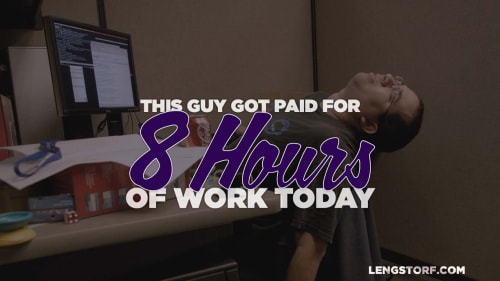
When a company uses time to measure performance, employees are punished for high performance and rewarded for working inefficiently. This needs to stop.
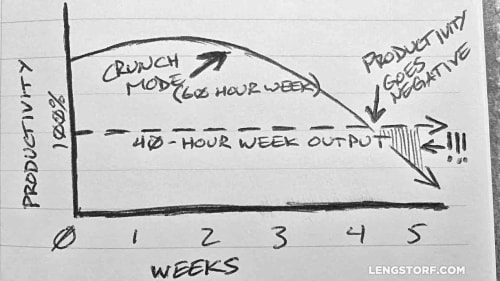
The way many businesses approach pressing deadlines is terrifying. It’s also, ironically, one of the least effective ways to meet deadlines.
Are our most valuable qualities being exploited at work to form bad habits that — if we don’t change soon — just might kill us?
Starting a new project is scary. What if it’s not perfect? What if people judge you? Here’s how to jumpstart your productivity with a Shitty First Draft.
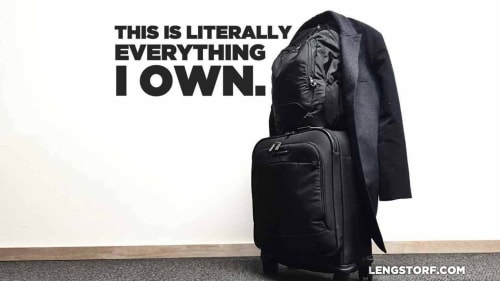
Today I flew to Milan, Italy, to kick off a full year of living and working remotely. So how did I feel? I didn’t feel much of anything. Which worried me.

When someone asks you for guidance, do you help him out? Or do you condescend to him and make him feel like an idiot?
Everything we've ever done ultimately becomes a story. How can we make sure the stories we tell ourselves — and others — are good?

I have a best friend. It feels awkward to say that out loud, and it really shouldn't. Why are men ashamed to have close relationships with other men?

As a kid I was so scared of horror films I'd get scared just thinking about them. As I got older I learned to see how the movie ends to take away its power.

On Thursday I went a full day where I left my phone and computer at home. Would you believe me if I told you I was more productive than usual this week?

Getting worked up because things that don’t affect me aren’t done my way is a shortcut to an extremely frustrating and deeply dissatisfying existence.

In my younger days, I had mixed feelings about going out for drinks. Lately, though, I love bellying up to the bar. Just not the way you do it.
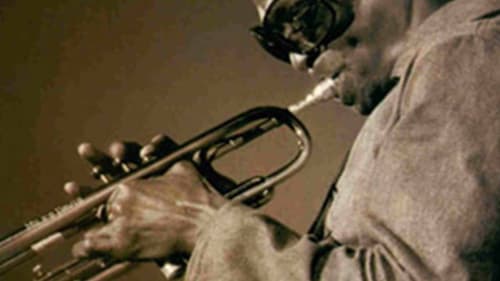
Every time I make a plan, it’s virtually guaranteed that something will go wrong. This was a significant stressor for me — until I learned to improvise.

When you hit a tree, you can blame the tree, avoid the tree, or learn why you didn't see the tree in the first place.